Dreaming about a few quiet acres near Temple where you can build, keep a garden, or simply spread out? Buying land feels exciting, but rural utilities, permits, and access rules can surprise even seasoned buyers. The good news: with a clear plan and the right local calls, you can move from idea to build-ready with confidence. This guide walks you through the essentials for Temple and surrounding Bell County communities, including water and septic basics, access and easements, land-use steps, timelines, and a practical checklist to use before you make an offer. Let’s dive in.
Start smart: first calls to make
Before you write an offer, confirm who governs your parcel and which services are available. In the Temple area, your due diligence should start with these calls:
- City of Temple: If the land is inside city limits or in the city’s ETJ, call the city to confirm water/sewer availability and building-permit rules. Start with the City of Temple.
- Groundwater Conservation District: Bell County is regulated by the Clearwater Underground Water Conservation District. Ask about well registration, any permit requirements, and spacing rules. Contact the Clearwater Underground Water Conservation District.
- Property taxes and agricultural valuation: Check assessed value, exemptions, and whether the land qualifies for an agricultural (1-d-1) appraisal. Visit the Bell County Appraisal District.
- Electric service: Identify the distribution utility and whether a service extension or transformer will be required. In many rural areas, a cooperative like Bluebonnet Electric Cooperative serves customers, while some locations fall under investor-owned utilities such as Oncor.
Water options near Temple
Water access is the first big question on most acreage. Around Temple and greater Bell County, you will likely encounter one of three scenarios.
City water
Some parcels inside Temple or in defined service areas can connect to municipal water. Always confirm connection policies, capacity, and any line-extension requirements directly with the City of Temple. Ask about tap fees, meter sizes, and timelines so you can plan your build schedule and costs.
Rural Water Supply Corporations
Many outlying parcels are served by Rural Water Supply Corporations. These member-based providers have their own service territories, hookup costs, and policies. Do not assume capacity is available. Contact the specific WSC early and request written confirmation of service, fees, and estimated timing. For context, you can view a list of public water systems operating in Bell County to identify potential providers and service areas.
Private wells
Private wells are common on small acreage. For an existing well, request the state well report, recent water-quality results, and any maintenance logs. If you plan to drill, confirm local well rules and registration with the Clearwater Underground Water Conservation District, and use licensed drillers who file proper construction reports with the state. For owner resources and how to find well information, visit Texas A&M’s well-owner guidance.
Septic systems made simple
Most small-acreage sites outside city sewer will rely on an on-site sewage facility (OSSF), commonly called a septic system. Understanding the rules early prevents costly redesigns and delays.
Permit basics and the 10-acre rule
In Texas, you generally need a permit to construct, repair, or alter a septic system unless you qualify for an exemption. A well-known exemption is the "10-acre rule," which can apply to single-family homes on tracts 10 acres or larger that meet specific siting criteria. Local rules can be stricter, and the permitting authority may be the county, a local health district, or the state. Learn the basics from the TCEQ’s OSSF program guidance.
Site evaluations and timelines
Plan for a soil and site evaluation from a licensed site evaluator or engineer before you finalize design or close on the land. This evaluation informs whether a conventional or advanced system is feasible. By state rule, permitting authorities must act on OSSF planning materials within 30 days of receipt. Timelines vary by jurisdiction and site complexity, so start early and build in buffer time.
Power, internet, and gas
Electricity
Confirm your distribution utility and whether a new line, transformer, or pole set is needed. Costs and timelines depend on distance to the nearest line and site terrain. Many rural parts of Bell County are served by cooperatives like Bluebonnet Electric Cooperative. Other areas are in investor-owned utility territories such as Oncor. Ask for a written estimate and a timeline before you waive contingencies.
Communications and gas
Fiber or cable service is spotty on true acreage, so check provider availability by address. Satellite or fixed-wireless internet are common fallbacks. For gas, many properties use propane rather than natural gas lines. Plan tank placement, setbacks, and delivery access as part of your site layout.
Land use, access, and title
Access and easements
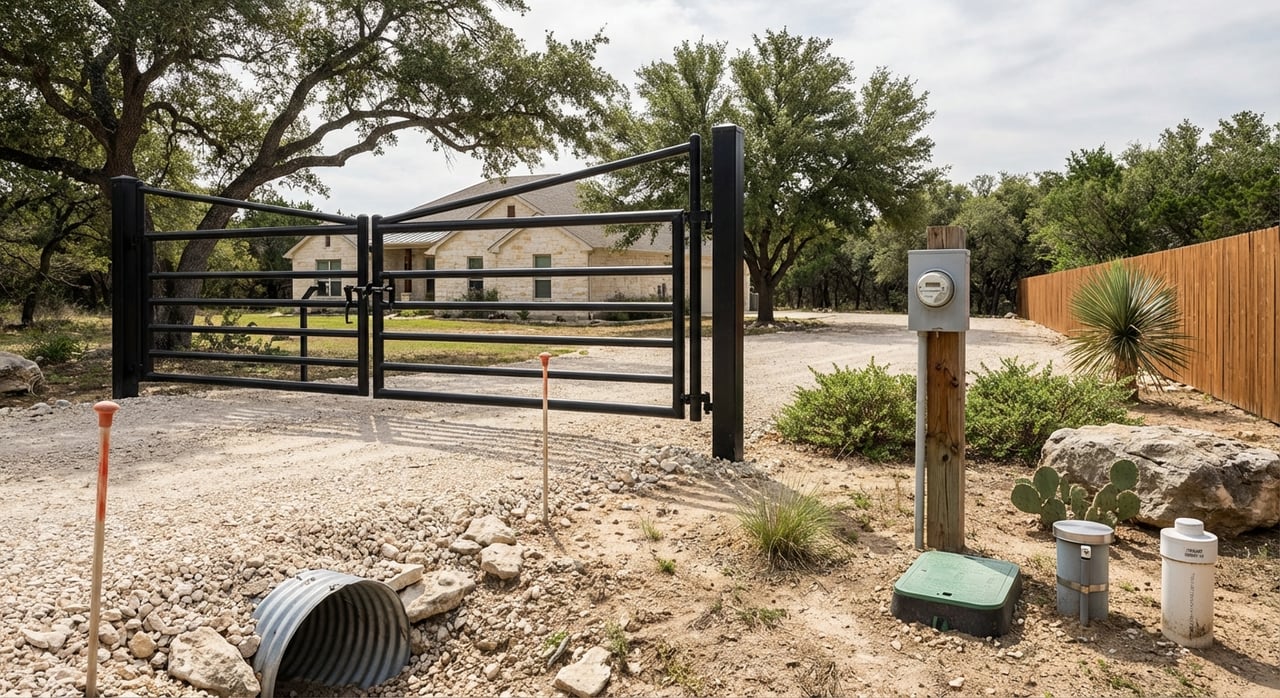
Verify recorded legal access through frontage on a public road or a recorded easement. If access relies on a private road or easement, review who maintains it, whether gates are allowed, and if utilities can use the same corridor. Ask for copies of the deed, all recorded easements, and any road-maintenance agreements.
Survey and title review
Order a current boundary survey sized to your plans, especially if you will build, fence, or finance. An ALTA/NSPS-level product gives the most clarity on boundaries, encroachments, easements, and rights-of-way. Review the title commitment carefully so you understand all exceptions. Title insurance covers many defects, but it will not clear known, recorded mineral severances unless resolved.
Minerals 101
In Texas, mineral rights are often severed from the surface, and the mineral estate is generally considered dominant. That means mineral owners or lessees can use parts of the surface as reasonably necessary for development. Check the chain of title for mineral reservations or active oil and gas leases and consult your title provider or counsel about surface-use agreements if needed. For definitions and context, see the Texas Royalty Council glossary.
City limits, ETJ, or county rules
Counties in Texas typically do not apply municipal-style zoning in unincorporated areas. They do regulate platting and subdivisions. If your land is inside Temple city limits or within the city’s ETJ, Temple’s development and building rules will apply, including utility hookup policies and permits. Confirm your parcel’s status and next steps with the City of Temple.
Taxes and the agricultural (1-d-1) appraisal
Land used for qualifying agricultural or open-space purposes may be eligible for a reduced property tax valuation known as the 1-d-1 agricultural appraisal. Intensity standards and documentation apply, and the Bell County Appraisal District posts application deadlines and requirements. If you plan to change use or seek an agricultural valuation, review the rules early and keep in mind that later changing the land’s use can trigger rollback taxes. Get forms and guidance from the Bell County Appraisal District.
Working with builders and setting a timeline
If you plan to build, get a local builder involved early. Rural site work, driveways, foundation design, and utility extensions require up-front planning and estimates.
- Confirm legal access, survey quality, and all title exceptions before design.
- Order a site and soil evaluation for septic feasibility and layout.
- Verify your water plan: city hookup, a Rural Water Supply Corporation connection, or a new well, and confirm local well rules with the Clearwater Underground Water Conservation District.
- Coordinate electric service design and placement with the distribution utility. Request a written estimate for any extension or transformer.
- Submit septic and building permit applications per the local authority. The TCEQ notes permitting authorities act on OSSF planning materials within 30 days. See the TCEQ OSSF program for details.
- For wells, confirm that your driller is licensed and that construction reports will be filed with the state. Check standards and licensing at the Texas Department of Licensing and Regulation.
Timelines vary. Septic design and permitting can take weeks to months depending on the site. Well drilling and testing may take days to weeks plus any district registration steps. Electric extensions can take weeks to months based on distance, permitting, and crew scheduling. Build cushions into your contract and do not remove contingencies until you have clear estimates.
Your Temple-area small-acreage buyer checklist
Use this list to structure your due diligence:
- Order a current title commitment and an ALTA/NSPS or similar detailed boundary survey.
- Confirm legal road access and obtain copies of any recorded easements and road-maintenance agreements.
- Verify development authority: city limits, ETJ, or county. Start with the City of Temple.
- Water plan: confirm city service, a Rural Water Supply Corporation hookup, or well feasibility. For wells, contact the Clearwater Underground Water Conservation District and ask for any registration or spacing requirements.
- Existing wells: request the state well report, pump records, and recent water-quality tests. For resources, see Texas A&M’s well-owner guidance.
- Septic: schedule a site evaluation and confirm if your plan needs a permit or qualifies under the 10-acre exemption. Review the TCEQ OSSF guidance.
- Electricity: identify the distribution utility and request a written estimate for any line or transformer extension. Many rural areas are served by Bluebonnet Electric Cooperative.
- Taxes: verify assessed value, exemptions, and 1-d-1 agricultural appraisal requirements with the Bell County Appraisal District.
- Minerals: search county records for mineral reservations or active oil and gas leases. Use the Texas Royalty Council glossary to understand key terms and consult your title provider.
- Floodplain and drainage: check FEMA maps and ask the local floodplain office about any building or elevation requirements.
Buying land near Temple can be straightforward if you confirm utilities, access, and permitting paths up front. With a practical plan and local expertise, you can protect your timeline and budget while setting up your acreage for long-term enjoyment. If you would like a step-by-step strategy, introductions to local providers, and on-the-ground guidance, connect with Rachel Holman to get started.
FAQs
What utilities should I verify for small acreage near Temple?
- Confirm water (city, Rural Water Supply Corporation, or well), sewer or septic permitting needs, and electric service territory. Start with the City of Temple for city or ETJ parcels and the TCEQ OSSF guidance for septic rules.
How does the Texas 10-acre septic rule work for rural homes?
- The rule may exempt certain single-family homes on 10 or more acres from standard OSSF permitting if strict siting conditions are met, but local authorities can be more restrictive. Review details with the permitting authority and the TCEQ OSSF program.
Who regulates wells in Bell County, and what should I request from the seller?
- The Clearwater Underground Water Conservation District oversees well registration and local rules. For existing wells, ask for the state well report, recent water-quality tests, and maintenance records, and confirm your driller is licensed through the TDLR.
Can I split my land in the Temple area later on?
- Possibly, but it depends on whether the parcel is inside city limits, the ETJ, or in the county. Platting and subdivision rules apply, and city parcels must follow Temple’s development standards. Start with the City of Temple to confirm requirements.
How do mineral rights affect my Bell County land purchase?
- Mineral rights are often severed in Texas, and the mineral estate can be dominant. Review title for reservations or leases and discuss surface-use protections with your title provider. For definitions, see the Texas Royalty Council glossary.
How do I apply for an agricultural (1-d-1) valuation in Bell County?
- Check eligibility, intensity standards, and deadlines with the Bell County Appraisal District. Plan documentation early, and be aware that changing the use later can trigger rollback taxes.